

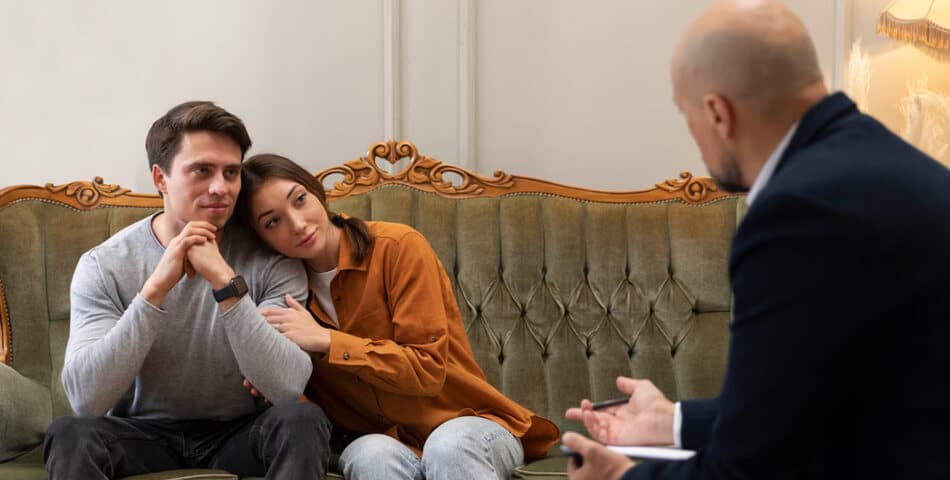
Every marriage has its seasons. At times it is the love, laughter and togetherness and at other times fight, disagreement and silence. All relationships have problems – no relationship is perfect: If you keep repeating the same thing over and over, what’s stopping you from having a fulfilling and loving marriage? In India, more and more couples are learning to believe that seeking professional help can save years of pain and stop little issues from becoming permanent cracks.
So what is marriage issues counseling?
Basically, it’s a therapist or counselor trained in the practice of counseling both halves of a couple to get hip to sources of conflict, improve communication and build stronger emotional connections. Counselor is a neutral and untainted terrain where husband and wife can voice their opinion without prejudices. And yet, couples often don’t even recognise that their fights aren’t about big issues but instead stem from feeling unheard or unappreciated. Counselling makes this point clear to them.
What counselling provides:
A place to talk without judgment.
Instruments to Analyse Underlying Factors of Repetition of Conflicts.
Recognition that so many battles are about emotional needs, rather than simply material matters.
A methodical approach to reinstituting trust, love and respect.
Advice for couples at any stage — newlywed, mature or struggling.
Communication: The essence of counselling
Better communication is one of the primary benefits of marriage problems counselling. In the majority of homes, couples have difficulty expressing feelings in a healthy manner. One might get angry, the other shut down, and over time space grows. The counselor can help each person listen and respond in new ways so that they feel heard.
Instead of saying, for example, “You never care about me,” a healthier alternative might be something like, “I feel lonely when you don’t spend time with me.” Those, minor shifts lower the blame heat and open the door for solutions.
Communication skills taught in counselling:
Having “I feel” statements versus blame.
Active listening without interrupting.
Expressing needs clearly and respectfully.
Reducing defensive or aggressive responses.
Learning to respect the other’s feelings.
Fostering empathy that shifts condemnation to compassion.
Uncovering deeper issues
Another advantage of counselling is “that you can get to the core of underlying issues”. And it is often that conflicts in a marriage are not only about what’s happening now, but about what has already happened. Traumas from childhood, fears of abandonment or unresolved anger might manifest in the marriage. A good therapist will help you and your partner identify these patterns, work on them and stop doing so much damage to the relationship.
Deeper issues explored in sessions:
I’m interested in the roots of childhood trauma or neglect and its impact on adult relationships.
Insecurity as a result of fear of rejection or abandonment.
Poor self-esteem leading to both dependence and motive of control.
EMDR can treat the trauma around a past relationship or infidelity that’s causing trust issues.
Upbringing and family impacts in communication and conflict styles.
External pressures in Indian marriages
In India, many couples also grapple with external pressures — in-law disputes, financial strain or work-life imbalance. Counseling doesn’t magically wash away these challenges, but it helps partners face them together rather than in opposition. As couples practice mutual support rather than blame, resilience is fortified.
Common external stressors addressed:
In-law conflicts and family interference.
Financial strain and money management discrepancies.
Parenting disagreements.
Career and work–life balance struggles.
Cultural expectations and social pressures.
The emergence of online marriage therapy
The rise of the digital era has also made access easier. The days are gone when you have to go to the therapist’s office in person for marriage problems counselling were many years ago. This is a great option for couples that live in different cities, busy professionals or even those who feel embarrassed about visiting a clinic. Online sessions, discreet and convenient, are also easing the stigma for young couples seeking help.
Advantages of online counselling:
Private and confidential - from home.
Flexible scheduling for working professionals.
Convenient for long-distance couples.
Less stigmatizing than going to the clinic.
Fair access to couples in metros, small towns, and overseas.
Choosing the right counselor
And it’s worth noting that you must get the right counselor. Search for someone trained in marriage or family therapy and experienced at addressing varying concerns. And comfort level is important as well — both partners should feel safe and respected during sessions.
Characteristics Of A Good Marriage Therapist:
Degree in marriage/family therapy or psychology.
Skilled in working with a wide range of relationship challenges.
Offers a secure, private non-judgmental environment.
You can still give her therapeutic resources (CBT, hypnotherapy, Gestalt etc.).
Respects cultural and personal values.
Counselling as prevention, not just treatment
One myth is that counselling is for marriages on the brink of divorce. In practice it is best when given early. And just as we see our doctors for wellness check-ups, so too can couples visit a counselor to shore up their relationship before big problems happen. It’s a sign of strength, not weakness.
Preventive uses of counselling:
The enhancement of closeness among recently married people.
Pre-marital counselling for realistic expectations.
Resolutions in time before they blow out of proportion.
Applying communication and stress management skills.
Building emotional intimacy proactively.
Marriage is the maturation of two people on their way to maturity. It’s natural to clash; how we manage the collision will determine the health of the relationship. Counselling and marriage problems Couples are provided with the means, guidance, and support to help them progress from focusing on blame towards understanding and from distance to closeness. For those couples in India and beyond, it is an affirmation that love from the rubble of resentment can rise — if two people are prepared to listen, learn, grow and heal together.
 Sonia Jha